RISK ADVISORY:
How uncertainty, misinformation and evolving maritime threats are shaping risk perceptions, operational decisions and insurance exposures across the Middle East’s key maritime corridors.
Carl von Clausewitz (1780–1831) was a Prussian general and military theorist, best known as the author of Vom Kriege (On War). He argued that warfare cannot be separated from political purpose, famously observing that “war is the continuation of policy by other means.”
To be “Clausewitzian” is therefore to recognise the fundamental relationship between military force, political objectives, and decision-making under uncertainty.
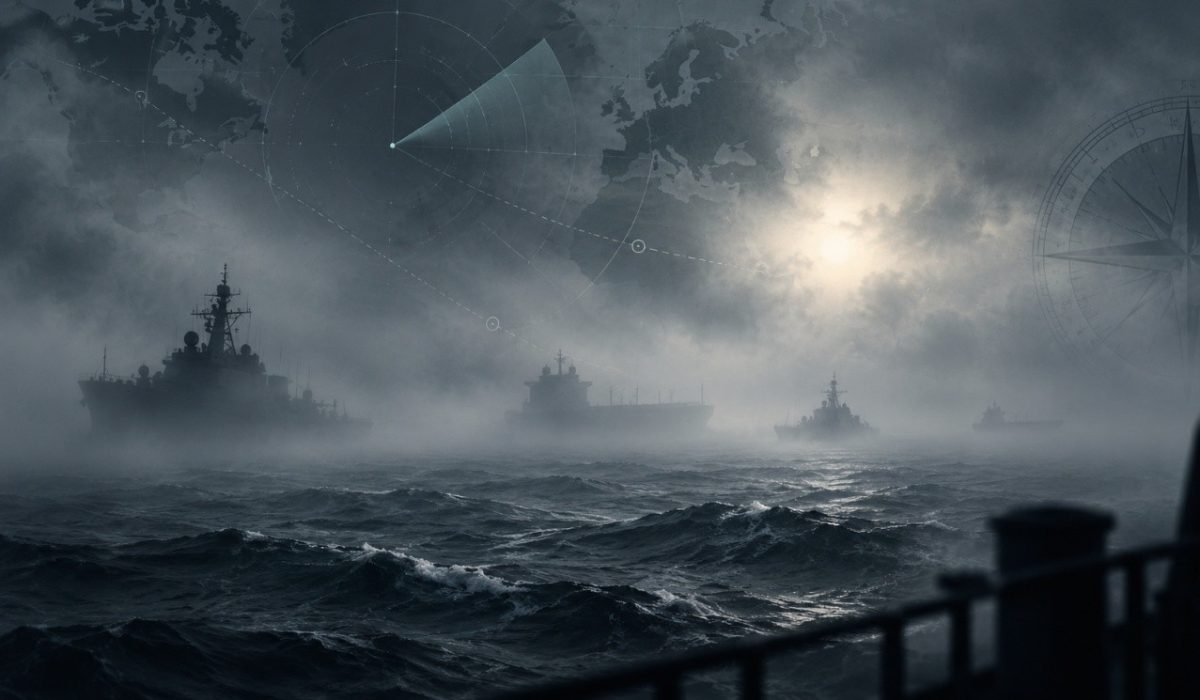
Clausewitz’s writings also gave rise to what later became known as the “Fog of War”: the inherent uncertainty created by incomplete intelligence, conflicting information, deception, and rapidly evolving events during armed conflict.
Almost 200 years after his death, and despite the extraordinary technology now available, Clausewitz’s concept remains remarkably relevant to ship operators and insurers. Conflicting reports, misinformation, delayed verification, and rapidly changing military activity can obscure the true threat picture and distort the risk landscape.
The consequence is an increased risk of misjudging exposure, routing decisions, and escalation potential. Sound decision-making therefore requires cautious assumptions, multiple intelligence sources, and continuous reassessment. “Go” and “No-Go” must both remain viable options, capable of being taken – and reversed – decisively as circumstances change. Crew safety, vessel exposure, cargo, environmental consequences, trade, and commercial considerations, together with internal and external stakeholder interests, form a complex web of risks. Navigating these competing considerations presents a considerable challenge even for the most experienced leadership and executive teams.
Arabian/Persian Gulf
Maritime hostilities in the Persian Gulf and Gulf of Oman have escalated sharply since 5th September, with both U.S. and Iranian forces conducting, attempting, or claiming attacks against vessels. U.S. forces have acknowledged strikes against five Iranian tankers, while Iran has launched repeated missile attacks against U.S. naval assets and claims to have targeted a wider group of commercial vessels. Several merchant-vessel casualties reported on 9th September remain subject to uncertainty over attribution and circumstances.
The picture as at 10th September 2026 is therefore one of a significant escalation in the direct U.S.–Iran maritime confrontation across the Arabian/Persian Gulf and Gulf of Oman. U.S. strikes have generally been easier to verify independently, while some Iranian claims remain contested or unconfirmed.
Red Sea
Meanwhile, in the Red Sea, the fog remains very much present. Reporting quality is uneven. Headlines frequently precede verification, attribution can change as evidence emerges, and interested parties may present events through markedly different perspectives. Intelligence must therefore be assessed according to source, corroboration, and confidence level rather than simply repeated as fact.
Excluding Saudi and Yemeni-owned or operated vessels and excluding the Indian-flagged MSV FAIZE NOORE OLIYA, a vessel without an IMO number and subsequently the subject of unverified allegations that it was carrying military cargo, the last Houthi attack we identify against an otherwise “neutral” internationally trading vessel occurred almost one year ago. The Dutch-flagged multipurpose/general cargo vessel MINERVAGRACHT was struck by a Houthi cruise missile in the Gulf of Aden on 29th September 2025. The Houthis claimed the vessel constituted a legitimate target because its owning company had breached their restrictions concerning calls at Israeli ports. That alleged nexus has not been independently substantiated.
This near year long period of no “neutral” attacks does not mean that the threat has disappeared. It does, however, demonstrate the importance of distinguishing between capability, intent and actual targeting behaviour when assessing current maritime exposure.
Risk Perception
Risk perception varies materially between stakeholders, reflecting differences in exposure, information, experience, and risk appetite.
Commercial vessels continue to transit both the Strait of Hormuz and Bab el-Mandeb, notwithstanding the elevated threat environment. On 8th September, preliminary data recorded 6 merchant vessel Hormuz transits and 25 merchant vessel transits through Bab el-Mandeb. Other owners, faced with the same intelligence picture, elect not to proceed. As the saying goes; “those in doubt, heave to”. To others; “freight always finds a way”.
Lloyd’s List Intelligence reported on 5th August that more than 70 vessels over 10,000 dwt remained in the Persian Gulf from the outbreak of hostilities on 28th February, while a further 65 vessels that had entered during the temporary MoU period had yet to leave. Those figures should not, however, be treated as the current 10th September trapped-vessel count. Significant two-way movement has subsequently occurred with Lloyd’s List Intelligence reporting at least 346 non-Iranian-linked Hormuz transits during August, comprising 191 inbound and 155 outbound movements.
Insurers will still cite the Indian Ocean/Gulf of Oman risk of Somali pirates. Armed Guard warranties still prevail. Yet our research shows the last successful Somali pirate hijacking of a conventional tanker, bulker, or containership over 10,000 dwt flying a Paris MoU Whitelist flag was MV RUEN, a 41,600 dwt Malta-flagged bulk carrier, on 14th December 2023. That was over 1,000 days ago. Same picture, different lens.
Finding clarity through the fog of uncertainty
The essential lesson remains simple: Fog does not remove the hazard; it reduces the mariner’s ability to identify, understand and respond to it. Even with fair winds and following seas, a close watch must always be maintained on the horizon. There is not always a right or wrong decision to be made; there is only the course that, on the information available, appears the wisest. Tigermar continues to professionally support and advise our clients as they navigate through these troubled and uncertain times.
Related posts:
RISK ADVISORY: Tigermar developed a bespoke solution to support client's growth
RISK ADVISORY: Tigermar’s claims advocacy made all the difference.
RISK ADVISORY: Tigermar works with partners like CyberOwl to help clients strengthen resilience and ...